
Industrial HVAC systems are the unsung heroes of countless manufacturing plants, warehouses, and processing facilities. These complex systems, far beyond the typical home air conditioner, are crucial for maintaining optimal environmental conditions for machinery, products, and, importantly, the workforce. Understanding their design, installation, maintenance, and the ever-evolving technological advancements within the field is paramount for efficiency, safety, and sustainability.
This guide delves into the multifaceted world of industrial HVAC, exploring various system types, design considerations, and best practices for installation and maintenance. We’ll examine energy efficiency strategies, safety regulations, and the integration of advanced technologies like AI and BIM. By the end, you’ll possess a comprehensive understanding of these critical systems and their impact on industrial operations.
Types of Industrial HVAC Systems
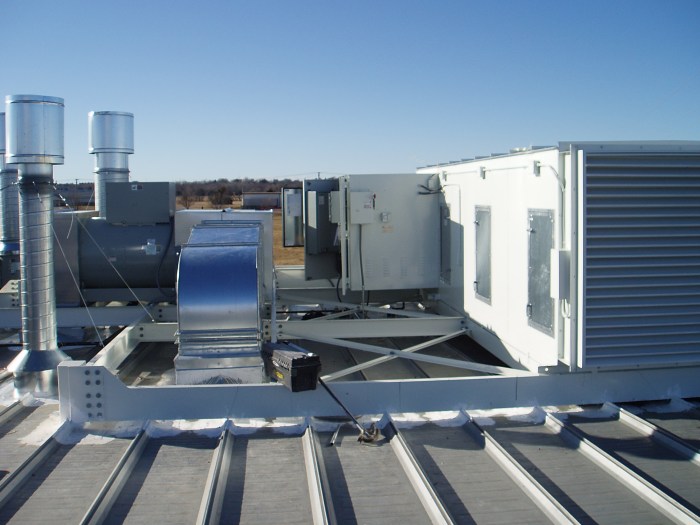
Industrial HVAC systems are crucial for maintaining optimal environmental conditions in various manufacturing, processing, and storage facilities. The choice of system depends heavily on factors such as the size of the facility, the type of processes involved, the required temperature and humidity levels, and budget considerations. Selecting the right system is vital for productivity, product quality, and worker comfort.
Air Handling Units (AHUs)
AHUs are the workhorses of many industrial HVAC systems. They are responsible for conditioning air—heating, cooling, humidifying, dehumidifying, and filtering—before distributing it throughout the facility. Key components include fans, filters, heating coils, cooling coils, and dampers. The interoperability of these components allows for precise control over the air’s properties. Larger facilities often utilize multiple AHUs working in concert to maintain consistent conditions across different zones.
Chillers
Chillers are refrigeration systems used to provide chilled water to AHUs or other cooling equipment. They are commonly employed in large industrial spaces requiring significant cooling capacity. Chillers can be air-cooled or water-cooled, with water-cooled systems generally offering higher efficiency. Key components include a compressor, condenser, evaporator, and expansion valve. The chiller’s capacity is measured in tons of refrigeration, with larger facilities requiring higher-capacity chillers.
Efficient chiller operation is critical for minimizing energy consumption.
Boilers
Boilers provide hot water or steam for heating purposes in industrial HVAC systems. They are frequently used in applications requiring high temperatures, such as industrial drying processes or space heating in cold climates. Key components include a combustion chamber, heat exchanger, pump, and controls. Boiler efficiency is determined by factors such as fuel type, design, and maintenance. The selection of a boiler depends on the required heat output and the available fuel source.
Geothermal Systems
Geothermal HVAC systems utilize the relatively constant temperature of the earth to provide heating and cooling. They involve a ground loop heat exchanger that circulates water underground to absorb or release heat. This water then passes through a heat pump to either heat or cool the building. Key components include the ground loop, heat pump, and distribution system.
Geothermal systems are known for their energy efficiency and reduced environmental impact but require significant upfront investment.
Comparison of Industrial HVAC Systems
| System Type | Applications | Advantages | Disadvantages |
|---|---|---|---|
| Air Handling Units (AHUs) | General HVAC, ventilation, filtration | Versatile, adaptable to various needs, relatively low initial cost (compared to chillers or geothermal) | Can be less energy-efficient than other systems, especially in large spaces |
| Chillers | Large-scale cooling, process cooling | High cooling capacity, efficient for large spaces | High initial cost, requires specialized maintenance, potential for refrigerant leaks |
| Boilers | Space heating, process heating, steam generation | Reliable, readily available fuel sources, can provide high temperatures | Can be inefficient, potential for emissions, requires regular maintenance |
| Geothermal Systems | Heating and cooling | Highly energy-efficient, environmentally friendly, low operating costs (long term) | High initial cost, site-specific limitations, potential for ground water contamination (if not properly installed and maintained) |
Energy Efficiency Considerations
The energy efficiency of industrial HVAC systems varies considerably depending on the system type, its size, and its operating conditions. Chillers, for example, can be highly efficient when properly sized and maintained, while boilers can have lower efficiencies depending on the fuel type and boiler design. Geothermal systems generally boast the highest energy efficiency, often significantly reducing energy consumption compared to traditional systems.
Proper system design, regular maintenance, and the use of energy-efficient components are crucial for optimizing the energy performance of any industrial HVAC system. Factors such as building insulation and airtightness also significantly impact overall energy efficiency. For instance, a poorly insulated building will require a larger HVAC system and consume more energy, regardless of the system type.
Design Considerations for Industrial HVAC Systems
Designing effective industrial HVAC systems requires a multifaceted approach, considering numerous factors beyond simply heating and cooling. The specific needs of the industrial process, the building’s physical characteristics, and environmental regulations all play crucial roles in shaping the final design. Failure to account for these variables can lead to inefficient operation, increased energy costs, and potential safety hazards.The design process begins with a thorough understanding of the industrial facility’s requirements.
This includes analyzing the building’s size, layout, and the nature of the industrial processes housed within. The type of industry significantly influences the design, as different processes generate varying levels of heat, humidity, and particulate matter. For example, a steel mill will require a vastly different HVAC system compared to a precision electronics manufacturing facility. Furthermore, environmental considerations, such as local climate conditions and energy efficiency regulations, must be factored into the design.
Factors Influencing Industrial HVAC System Design
Building size and layout are fundamental considerations. Larger facilities necessitate more extensive ductwork and higher-capacity equipment. The building’s layout, including ceiling heights, wall construction, and the presence of obstructions, impacts airflow patterns and the placement of HVAC equipment. The type of industry dictates the specific environmental conditions required for optimal process performance. For instance, a pharmaceutical cleanroom necessitates a highly controlled environment with HEPA filtration and precise temperature and humidity control, while a foundry may require robust ventilation to remove fumes and particulate matter.
The presence of hazardous materials or processes will also influence the selection of equipment and materials, prioritizing safety and compliance with relevant regulations.
Sizing and Selecting HVAC Equipment
Proper sizing and selection of HVAC equipment are crucial for efficient and reliable operation. This process involves careful calculation of heating and cooling loads, considering factors such as building envelope characteristics, internal heat gains from machinery and personnel, and the desired indoor environmental conditions. The selection of equipment must also consider factors such as energy efficiency, maintenance requirements, and lifecycle costs.
- Example 1: Food Processing Plant: A food processing plant requires precise temperature and humidity control to maintain product quality and prevent spoilage. This may involve using specialized refrigeration systems, humidification systems, and potentially, dedicated air handling units for different zones within the facility.
- Example 2: Data Center: Data centers demand highly reliable and efficient cooling systems to prevent overheating of sensitive electronic equipment. This often involves using precision cooling systems, such as computer room air conditioners (CRACs) or computer room air handlers (CRAHs), with redundant systems to ensure continuous operation.
- Example 3: Manufacturing Facility with High Heat Loads: A manufacturing facility with significant heat generation from machinery will require a system with sufficient cooling capacity to maintain comfortable working conditions. This might involve using large capacity chillers, air-cooled condensers, and extensive ductwork networks.
Sample HVAC System Layout for a Hypothetical Industrial Facility
Consider a hypothetical 100,000 square foot manufacturing facility producing automotive parts. The facility is a rectangular building with a high ceiling (25 feet) and several distinct process areas: machining, assembly, and packaging. The layout would incorporate three separate air handling units (AHUs), one for each process area.The machining area, generating significant heat and particulate matter, would have its own AHU with high-capacity cooling coils and robust filtration systems.
This AHU would be located centrally within the machining area, with ductwork strategically placed to ensure adequate air circulation and minimize air velocity variations. The assembly area, requiring a more controlled environment, would have a separate AHU with precise temperature and humidity control. The packaging area, with lower heat loads, would utilize a smaller AHU. All three AHUs would be connected to a central chiller plant for cooling.
The return air ductwork would be designed to collect air from each zone, ensuring proper ventilation and minimizing the spread of contaminants between areas. Exhaust systems would be integrated to remove fumes and particulate matter from the machining area. The entire system would be monitored by a building management system (BMS) for optimal performance and energy efficiency. This textual description provides sufficient detail to create a detailed HVAC system diagram.
From the intricate workings of chillers and air handling units to the crucial role of energy efficiency and safety regulations, the realm of industrial HVAC systems is both complex and vital. This guide has provided a foundational understanding of these systems, highlighting their importance in maintaining productivity, safety, and environmental responsibility within industrial settings. By embracing technological advancements and adhering to best practices, businesses can optimize their HVAC systems for peak performance and long-term sustainability.
Questions and Answers
What are the typical lifespan of industrial HVAC components?
Lifespans vary greatly depending on usage, maintenance, and component type. Chillers might last 15-20 years, while some components may require replacement more frequently.
How often should industrial HVAC systems be inspected?
Regular inspections, ideally every 3-6 months, are recommended to identify potential issues before they escalate into major problems. A comprehensive annual service is also crucial.
What are the common causes of industrial HVAC system failures?
Common causes include lack of regular maintenance, component wear and tear, refrigerant leaks, and improper system design.
How can I reduce energy consumption in my industrial HVAC system?
Implement energy-efficient components, optimize system controls, implement preventative maintenance, and consider using variable frequency drives (VFDs) to adjust airflow based on demand.


