
Industrial adhesives and sealants are the unsung heroes of modern manufacturing, quietly holding countless products together and ensuring their longevity. From the intricate components of aircraft to the robust structures of buildings, these materials play a crucial role in diverse industries. Their performance characteristics – strength, durability, and resistance to various environmental factors – are paramount to the success of numerous applications.
Understanding the nuances of different adhesive and sealant types, their manufacturing processes, and their impact across various sectors is vital for engineers, designers, and anyone involved in the production or use of these essential materials. This overview delves into the key aspects of this critical field, exploring market trends, technological advancements, and future possibilities.
Market Overview of Industrial Adhesives and Sealants
The industrial adhesives and sealants market is a significant and dynamic sector, experiencing consistent growth driven by advancements in material science and increasing demand across diverse industries. This market encompasses a wide range of products, each tailored to specific applications and performance requirements. Understanding the market size, growth trends, and technological innovations is crucial for businesses operating within this space.
Market Size, Growth Rate, and Key Trends
The following table provides a snapshot of the industrial adhesives and sealants market’s performance over recent years. Note that precise figures vary depending on the source and market segmentation used. These figures represent a general overview based on industry reports and analyses.
| Year | Market Size (USD Billion) | Growth Rate (%) | Key Trends |
|---|---|---|---|
| 2022 | 55 | 4.5 | Increased demand for sustainable adhesives, focus on automation in application, growth in the construction sector. |
| 2023 | 57.5 | 4.5 | Rising adoption of high-performance adhesives in electronics, automotive lightweighting initiatives driving demand for strong, lightweight bonding solutions. |
| 2024 (Projected) | 60 | 4.0 | Expansion into emerging markets, increasing focus on regulatory compliance (e.g., VOC emissions), development of specialized adhesives for niche applications (e.g., medical, aerospace). |
| 2025 (Projected) | 63 | 5.0 | Continued growth in e-commerce driving demand for packaging adhesives, innovation in bio-based adhesives, emphasis on improved durability and longevity of adhesive bonds. |
Recent Innovations and Technological Advancements
Several recent innovations have significantly impacted the performance and applications of industrial adhesives and sealants. These advancements are driving market growth and creating new opportunities.
The following points highlight some key examples:
- Development of high-performance, thermally conductive adhesives for electronics applications, enabling efficient heat dissipation in increasingly powerful devices.
- Creation of bio-based adhesives derived from renewable resources, reducing environmental impact and meeting growing sustainability demands.
- Advancements in UV-curable adhesives, allowing for rapid curing and improved process efficiency in various manufacturing processes.
- Introduction of smart adhesives incorporating sensors and other technologies for real-time monitoring of bond integrity and performance.
- Development of self-healing adhesives capable of repairing minor damage to the adhesive bond, extending the lifespan of products and reducing maintenance needs.
Key Factors Driving Market Growth
Several factors contribute to the sustained growth of the industrial adhesives and sealants market. These factors are interconnected and reinforce each other.
These factors include:
- Growth in End-Use Industries: Expanding sectors such as construction, automotive, electronics, and packaging are major consumers of industrial adhesives and sealants, driving overall market demand.
- Technological Advancements: Continuous innovation in adhesive and sealant formulations leads to improved performance characteristics, opening up new applications and replacing traditional fastening methods.
- Increasing Demand for Sustainability: The growing focus on environmentally friendly materials and processes is driving the development and adoption of bio-based and low-VOC adhesives.
- Automation and Process Efficiency: The increasing use of automated dispensing and application systems enhances productivity and reduces labor costs, contributing to market growth.
- Rising Disposable Incomes and Infrastructure Development: In developing economies, rising disposable incomes and significant infrastructure development projects fuel the demand for construction materials and packaging, thereby boosting the demand for adhesives and sealants.
Types of Industrial Adhesives and Sealants
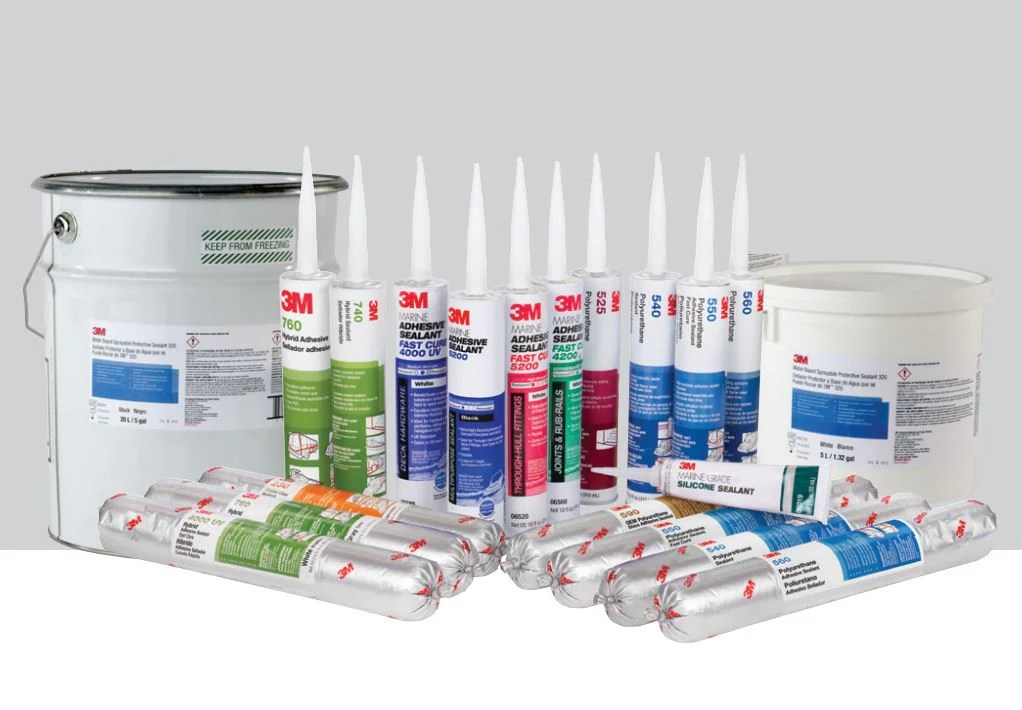
The selection of an appropriate industrial adhesive or sealant is crucial for ensuring the structural integrity, durability, and performance of a wide range of products and applications. The choice depends heavily on the specific requirements of the project, considering factors such as the materials being bonded, the environmental conditions, and the desired performance characteristics. Understanding the different types available is paramount to making informed decisions.
Industrial adhesives and sealants are broadly classified based on their chemical composition, each exhibiting unique properties and suitability for specific applications. This section details the key types, their characteristics, and their typical uses across various industries.
Chemical Composition and Properties of Industrial Adhesives and Sealants
The following table summarizes the key properties and common applications of various industrial adhesive and sealant types.
| Type | Key Properties | Common Applications |
|---|---|---|
| Epoxy | High strength, excellent adhesion to a variety of substrates, good chemical resistance, moderate temperature resistance. | Automotive components, structural bonding, aerospace applications, electrical insulation. |
| Acrylic | Good adhesion to many substrates, fast curing, versatile, relatively low cost. | Woodworking, bonding plastics, general purpose applications, automotive interiors. |
| Silicone | Excellent temperature resistance, high flexibility, good weatherability, low shrinkage. | High-temperature applications, sealing, caulking, automotive gaskets, aerospace seals. |
| Polyurethane | High strength, good flexibility, good abrasion resistance, moisture cure capability. | Construction, bonding flexible materials, coatings, automotive parts. |
| Anaerobic | Cures in the absence of air, high strength, good gap-filling properties. | Threadlocking, sealing pipe fittings, shaft retention. |
| Cyanoacrylate (Super Glue) | Very fast curing, high initial strength, good for small gaps. | Precision bonding, electronics assembly, model making (note: limited temperature resistance). |
Comparative Performance Characteristics
Different adhesive and sealant types exhibit varying performance characteristics. Epoxy adhesives, for instance, generally offer superior strength and chemical resistance compared to acrylics, but may be more expensive and have longer curing times. Silicone sealants excel in high-temperature applications where other types might fail, but may not possess the same shear strength as epoxies. The selection process often involves a trade-off between various properties such as strength, durability, cost, and curing time.
For example, in aerospace applications, where extreme temperature fluctuations and high reliability are paramount, silicone sealants are frequently preferred over less temperature-resistant alternatives despite potentially higher costs. In contrast, the lower cost and fast curing time of acrylic adhesives make them suitable for high-volume manufacturing applications like furniture assembly.
Specific Applications by Adhesive Type
The versatility of industrial adhesives and sealants extends across numerous industries. Their specific applications are often dictated by the unique properties of each type.
Epoxy Adhesives:
- Structural bonding in aerospace components.
- Repairing cracked automotive parts.
- Creating high-strength joints in construction.
- Encapsulating electronic components.
Acrylic Adhesives:
- Bonding wood in furniture manufacturing.
- Assembling plastic parts in consumer electronics.
- Adhesives in automotive interior trim.
- General purpose bonding in various industries.
Silicone Sealants:
- Sealing high-temperature joints in engines.
- Caulking in construction applications exposed to harsh weather.
- Creating gaskets in automotive and aerospace applications.
- Insulation in electrical systems.
Polyurethane Adhesives:
- Bonding flexible materials in footwear manufacturing.
- Creating durable coatings in construction.
- Applications in automotive body panels.
- Use in flexible packaging.
Manufacturing and Production Processes
The manufacturing of industrial adhesives and sealants is a complex process requiring precise control at each stage to ensure product quality and consistency. Variations exist depending on the specific adhesive or sealant type, but common principles and processes generally apply. This section details the typical manufacturing steps and quality control measures employed.
The production process is highly dependent on the specific formulation of the adhesive or sealant. However, several key steps are common across most manufacturing processes.
Manufacturing Steps
The production of industrial adhesives and sealants typically follows a series of well-defined steps. These steps, while adaptable to different formulations, ensure the final product meets the required specifications for performance and reliability.
- Raw Material Sourcing and Handling: High-quality raw materials are crucial. This stage involves careful selection of polymers (e.g., acrylics, epoxies, silicones, polyurethanes), solvents, fillers, and additives. Materials are stored and handled according to strict guidelines to maintain their properties and prevent contamination.
- Mixing and Dispersion: The selected raw materials are precisely weighed and measured before being mixed in large, specialized mixers. This process often involves multiple stages to ensure uniform dispersion of components and to achieve the desired viscosity and rheology. High-shear mixers are commonly used to break down agglomerates and ensure a homogeneous mixture.
- Reaction and Curing: Many adhesives and sealants undergo chemical reactions during production. This may involve heating or cooling the mixture to optimize the reaction rate and achieve the desired properties. The curing process, which may involve further heating or exposure to UV light, converts the liquid mixture into a solid adhesive or sealant.
- Quality Control Checks (In-Process): Throughout the mixing and curing stages, rigorous quality control checks are performed. These checks include viscosity measurements, testing of the chemical composition, and assessment of physical properties such as tensile strength and adhesion. Any deviations from the specified parameters trigger corrective actions.
- Packaging: Once the adhesive or sealant has cured and passed quality checks, it’s packaged into various containers – tubes, cartridges, drums, or bulk containers – depending on the application and quantity. Packaging is designed to protect the product from environmental factors and maintain its shelf life.
Quality Control Measures
Maintaining consistent product quality is paramount in the adhesives and sealants industry. Robust quality control measures are implemented throughout the manufacturing process.
- Raw Material Inspection: Incoming raw materials are rigorously inspected to ensure they meet the specified purity, viscosity, and other critical parameters. This often involves chemical analysis and physical testing.
- In-Process Monitoring: Real-time monitoring of the mixing and curing processes is essential. Parameters such as temperature, pressure, and viscosity are continuously tracked and recorded to ensure they remain within the acceptable range.
- Finished Product Testing: Once the product is packaged, further testing is conducted to verify its final properties. This may include adhesion tests, tensile strength tests, temperature resistance tests, and shelf-life studies.
- Statistical Process Control (SPC): SPC techniques are widely used to monitor and control the manufacturing process. This involves collecting data on key process parameters and using statistical methods to identify and address any variations or trends.
Manufacturing Process Flowchart
A simplified flowchart visually represents the key stages involved.
The flowchart would begin with a box labeled “Raw Material Sourcing”. Arrows would then lead to boxes representing “Raw Material Inspection”, “Mixing and Dispersion”, “Reaction and Curing”, and “In-Process Quality Control”. These boxes would be connected by arrows indicating the flow of the process. A final box labeled “Packaging and Storage” would be connected to the “In-Process Quality Control” box.
Finally, an arrow would lead from “Packaging and Storage” to a final box labeled “Finished Product Testing and Distribution”.
The world of industrial adhesives and sealants is dynamic, constantly evolving to meet the demands of increasingly complex applications. As technology advances and sustainability concerns gain prominence, the industry continues to innovate, creating new materials with enhanced performance and reduced environmental impact. Understanding the fundamentals, as Artikeld above, provides a strong foundation for navigating this ever-changing landscape and leveraging the potential of these vital bonding agents.
FAQ Insights
What are the main safety concerns when working with industrial adhesives and sealants?
Many industrial adhesives and sealants contain volatile organic compounds (VOCs) that can be harmful if inhaled. Skin irritation and eye damage are also potential risks. Always follow manufacturer safety guidelines and wear appropriate personal protective equipment (PPE).
How long do industrial adhesives and sealants typically last?
The lifespan of an adhesive or sealant depends heavily on the specific type, the application, and environmental conditions. Some can last for decades, while others may require replacement after a few years. Manufacturers usually provide expected lifespan data.
What are some examples of sustainable industrial adhesives and sealants?
The industry is moving towards water-based, bio-based, and recycled-content adhesives and sealants to reduce environmental impact. Examples include soy-based adhesives and sealants made from recycled materials.
How are industrial adhesives and sealants chosen for a specific application?
Selection depends on factors such as the materials being bonded, the required strength, the operating temperature range, and the environmental conditions. Testing and consultation with adhesive specialists are often necessary.


