
Industrial automation systems are revolutionizing manufacturing and numerous other sectors, dramatically increasing efficiency, productivity, and safety. From the precise movements of robotic arms assembling vehicles to the intricate control systems managing entire power grids, automation’s impact is undeniable. This exploration delves into the core components, benefits, challenges, and future trends shaping this transformative technology.
We will examine various types of automation systems, including Programmable Logic Controllers (PLCs), Supervisory Control and Data Acquisition (SCADA) systems, and robotics, highlighting their applications across diverse industries. We’ll also consider the ethical and societal implications, such as job displacement and the need for robust cybersecurity measures.
Defining Industrial Automation Systems
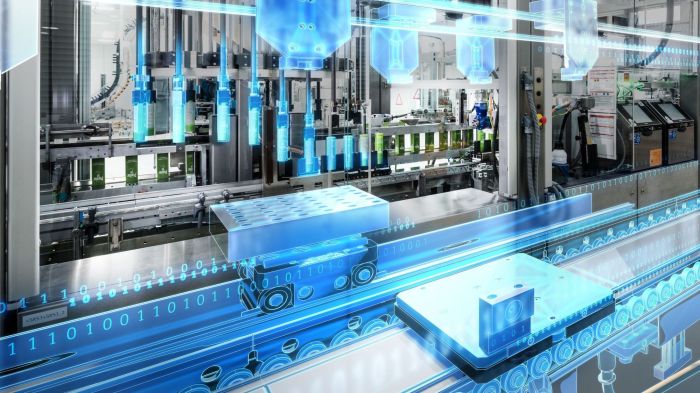
Industrial automation systems represent a significant advancement in manufacturing and various other industries, enabling increased efficiency, productivity, and safety. These systems integrate various technologies to automate processes, minimizing human intervention and optimizing operations. Understanding their core components and applications is crucial for appreciating their impact on modern industry.
Industrial automation systems aim to replace or assist human operators in performing repetitive, dangerous, or complex tasks. This is achieved through a combination of hardware and software components working in concert to monitor, control, and optimize industrial processes. The level of automation can range from simple machine control to highly complex, integrated systems managing entire factories.
Core Components of Industrial Automation Systems
Industrial automation systems are built upon several key components. These include Programmable Logic Controllers (PLCs), which act as the brains of the system, processing data and making control decisions; sensors and actuators, which gather information about the process and execute control actions; Human-Machine Interfaces (HMIs), which provide operators with a visual representation of the process and allow for interaction; and communication networks, which facilitate data exchange between different components of the system.
Furthermore, advanced systems may incorporate sophisticated software for data analysis, predictive maintenance, and process optimization.
Types of Industrial Automation Systems
Several distinct types of industrial automation systems cater to different needs and scales of operation.
Programmable Logic Controllers (PLCs): PLCs are ruggedized computers specifically designed for industrial environments. They are programmed to control various aspects of machinery and processes, reacting to sensor inputs and activating actuators accordingly. PLCs are ubiquitous in industrial settings, from simple machine control to complex production lines.
Supervisory Control and Data Acquisition (SCADA) systems: SCADA systems provide a higher-level overview and control of multiple PLCs and other devices across a larger geographical area. They allow operators to monitor and manage entire plants or even distributed networks of facilities. SCADA systems are crucial for real-time monitoring and control in industries such as energy, water treatment, and transportation.
Robotics: Robots play a vital role in industrial automation, performing tasks that are repetitive, dangerous, or require high precision. Industrial robots range from simple pick-and-place robots to highly sophisticated systems capable of complex assembly and manipulation tasks. They are particularly prevalent in automotive manufacturing, electronics assembly, and warehousing.
Examples of Industries Using Industrial Automation Systems
Numerous industries benefit significantly from the implementation of industrial automation systems. The following table illustrates this with specific examples:
| Industry | System Type | Benefits | Challenges |
|---|---|---|---|
| Automotive Manufacturing | PLCs, SCADA, Robotics | Increased production speed, improved quality, reduced labor costs, enhanced safety | High initial investment, system complexity, need for skilled technicians |
| Food and Beverage Processing | PLCs, SCADA | Improved product consistency, reduced waste, enhanced hygiene, increased traceability | Stringent sanitation requirements, potential for system downtime, data security concerns |
| Pharmaceutical Manufacturing | PLCs, SCADA, Robotics | Improved accuracy and precision in drug production, reduced contamination risk, enhanced regulatory compliance | High regulatory requirements, complex validation processes, need for highly skilled personnel |
| Oil and Gas | SCADA, Distributed Control Systems (DCS) | Improved efficiency in resource extraction and processing, enhanced safety, real-time monitoring of critical processes | Harsh operating environments, cybersecurity threats, high cost of maintenance and upgrades |
Benefits and Challenges of Industrial Automation
Implementing industrial automation systems offers significant advantages across various sectors, but also presents challenges that need careful consideration. The decision to automate should be based on a thorough assessment of both the potential gains and the inherent risks involved. This section will explore these aspects in detail.
Economic Advantages of Industrial Automation
Industrial automation delivers substantial economic benefits through increased efficiency and productivity. Automated systems operate continuously, without breaks or reduced performance due to fatigue, leading to higher output and faster production cycles. This translates directly into increased profitability. Moreover, automation reduces labor costs associated with repetitive tasks, though it’s crucial to note that this benefit should be considered alongside potential retraining and upskilling costs for displaced workers.
Precise and consistent automation minimizes errors and waste, further contributing to cost savings. For example, a car manufacturing plant using robotic welding systems can achieve a significant reduction in material waste compared to manual welding, resulting in substantial cost savings over time. Furthermore, automation can enable companies to compete more effectively in global markets by increasing production speed and lowering costs.
Impact of Industrial Automation on Worker Safety and Job Displacement
While automation enhances productivity, its impact on the workforce requires careful consideration. On the positive side, automation significantly improves worker safety by removing humans from hazardous environments. Repetitive strain injuries, exposure to harmful chemicals, and accidents involving heavy machinery are all significantly reduced through automation. For instance, automated systems can handle tasks in extreme temperatures or environments with high levels of radiation, eliminating risks to human workers.
However, the displacement of workers due to automation is a significant concern. Jobs involving repetitive or easily automated tasks are particularly vulnerable. This necessitates proactive measures such as retraining and upskilling programs to prepare the workforce for new roles within the evolving industrial landscape. Successful implementation of automation often requires a shift towards higher-skilled positions focusing on system maintenance, programming, and data analysis.
Environmental Considerations of Industrial Automation
Industrial automation can contribute positively to environmental sustainability through improved energy efficiency and waste reduction. Precise control systems in automated processes often lead to optimized energy consumption, reducing the overall carbon footprint of manufacturing. For example, smart sensors and AI-driven control systems can adjust energy usage based on real-time demands, minimizing waste. Moreover, automated systems can precisely manage materials and processes, resulting in reduced waste generation.
Automated sorting and recycling systems, for example, can improve the efficiency of waste management and resource recovery. The reduction in errors inherent in automated systems also contributes to less material waste, leading to reduced consumption of raw materials and lower environmental impact.
Technological Advancements in Industrial Automation
The landscape of industrial automation is undergoing a rapid transformation, driven by the convergence of several powerful technologies. These advancements are not merely incremental improvements; they represent a fundamental shift in how manufacturing processes are designed, managed, and optimized. This section will explore some key emerging technologies and compare traditional and modern approaches to industrial automation.The integration of artificial intelligence (AI), the Internet of Things (IoT), and cloud computing is revolutionizing industrial automation, leading to significant improvements in efficiency, productivity, and overall operational excellence.
Traditional methods, often reliant on programmable logic controllers (PLCs) and hardwired systems, are being augmented and, in some cases, replaced by more flexible and intelligent systems.
Emerging Technologies Impacting Industrial Automation
AI, IoT, and cloud computing are three pivotal technologies reshaping the industrial automation sector. AI enables sophisticated data analysis and predictive modeling, leading to improved decision-making and proactive maintenance. IoT facilitates the seamless connection of devices and systems, enabling real-time monitoring and control. Cloud computing provides the scalable infrastructure necessary to process and store the vast amounts of data generated by these interconnected systems.
These technologies are often used in conjunction, creating synergistic effects that amplify their individual benefits. For example, AI algorithms running on cloud servers can analyze data from IoT sensors deployed throughout a factory to predict equipment failures before they occur, preventing costly downtime.
Comparison of Traditional and Modern Automation Methods
Traditional automation relied heavily on pre-programmed logic and deterministic control systems. These systems were effective for repetitive tasks but lacked the adaptability and intelligence needed to handle variations in production or unexpected events. Modern approaches, however, leverage AI, machine learning, and advanced analytics to create more flexible and responsive systems. These systems can learn from data, adapt to changing conditions, and optimize performance in real-time.
For instance, a traditional robotic arm might perform a single, repetitive welding task, while a modern robotic arm, guided by AI, could adapt its movements to weld different components with varying geometries, improving both speed and accuracy. The shift is from rigid, pre-programmed systems to intelligent, adaptive systems.
Hypothetical Scenario: AI Integration in a Manufacturing Process
Consider a hypothetical scenario in an automotive manufacturing plant. The process involves assembling engine components. Traditionally, this would involve a series of fixed robotic arms performing pre-programmed tasks. However, with AI integration, the process could be significantly enhanced. IoT sensors embedded in the robotic arms and assembly line equipment would collect data on component position, assembly speed, and potential defects.
This data would be transmitted to a cloud-based AI platform. The AI system, trained on vast datasets of assembly data, would analyze this information in real-time, identifying potential issues, such as misaligned parts or slow assembly speeds. The AI would then adjust the robotic arm movements and assembly line speed to optimize the process, improving efficiency and reducing defects.
This dynamic adaptation based on real-time data analysis is a key advantage of modern AI-powered automation systems. Furthermore, predictive maintenance capabilities, based on sensor data analysis by the AI, would allow for proactive replacement of worn parts, minimizing unplanned downtime. The system could even learn and improve its performance over time, adapting to variations in component designs or manufacturing processes.
Security and Safety in Industrial Automation Systems
The increasing reliance on interconnected systems in industrial automation presents significant security and safety challenges. Cyberattacks targeting these systems can lead to production downtime, data breaches, equipment damage, and even safety hazards for personnel. Robust security measures are paramount to mitigate these risks and ensure the continued reliable operation of industrial facilities.
Vulnerabilities of Industrial Automation Systems to Cyberattacks
Industrial automation systems, often built with legacy equipment and protocols, frequently lack the inherent security features found in modern IT systems. These systems are often connected to external networks, creating entry points for malicious actors. Vulnerabilities include outdated software with known exploits, weak or default passwords, insufficient network segmentation, and a lack of intrusion detection and prevention systems.
Specific examples include the exploitation of vulnerabilities in Programmable Logic Controllers (PLCs), Supervisory Control and Data Acquisition (SCADA) systems, and industrial control networks. A successful attack could range from simple data theft to the complete disruption of operations, potentially leading to significant financial losses and safety incidents. For instance, a compromised PLC could be manipulated to alter production parameters, leading to equipment damage or product defects.
Security Protocols and Best Practices for Protecting Industrial Automation Systems
Several security protocols and best practices can significantly enhance the protection of industrial automation systems. These include implementing robust authentication and authorization mechanisms, such as multi-factor authentication and role-based access control. Regular software updates and patching are crucial to address known vulnerabilities. Network segmentation isolates critical systems from less secure areas, limiting the impact of a breach.
Intrusion detection and prevention systems monitor network traffic for malicious activity, providing early warnings of potential attacks. Furthermore, employing firewalls, virtual private networks (VPNs), and data encryption protect sensitive data both in transit and at rest. Finally, regular security audits and penetration testing help identify and address weaknesses in the system’s defenses. The use of anomaly detection systems can help identify unusual behavior that might indicate a cyberattack.
Implementing a Robust Security Plan for an Industrial Automation System
A comprehensive security plan is essential for protecting industrial automation systems. Implementation should follow a structured approach:
- Risk Assessment: Conduct a thorough risk assessment to identify potential vulnerabilities and threats specific to the industrial automation system. This includes analyzing the system architecture, identifying critical assets, and evaluating potential attack vectors.
- Security Policy Development: Develop a comprehensive security policy that Artikels security procedures, responsibilities, and accountability. This policy should cover areas such as access control, password management, incident response, and regular security audits.
- Network Segmentation: Implement network segmentation to isolate critical systems from less secure areas. This limits the impact of a breach and prevents attackers from easily moving laterally within the network.
- Intrusion Detection and Prevention: Deploy intrusion detection and prevention systems to monitor network traffic for malicious activity. These systems can detect and respond to attacks in real-time, minimizing their impact.
- Access Control: Implement strong access control measures, including multi-factor authentication and role-based access control. This ensures that only authorized personnel have access to sensitive systems and data.
- Regular Security Audits and Penetration Testing: Conduct regular security audits and penetration testing to identify and address vulnerabilities in the system’s defenses. This proactive approach helps prevent attacks before they can occur.
- Incident Response Plan: Develop and regularly test an incident response plan to handle security incidents effectively. This plan should Artikel procedures for identifying, containing, and recovering from security breaches.
- Employee Training: Provide regular security awareness training to employees to educate them about security threats and best practices. This includes training on phishing awareness, password security, and safe internet practices.
- Software Updates and Patching: Implement a robust software update and patching process to address known vulnerabilities in a timely manner. This helps to prevent attackers from exploiting known weaknesses.
- Data Backup and Recovery: Regularly back up critical data and ensure that a reliable recovery process is in place. This minimizes the impact of data loss in the event of a security breach or other disaster.
Future Trends in Industrial Automation
The future of industrial automation promises a landscape dramatically reshaped by converging technologies, leading to unprecedented levels of efficiency, productivity, and adaptability within manufacturing and beyond. This evolution will not only impact industrial processes but also significantly alter the nature of work and the broader societal fabric.The next decade will witness an acceleration in the integration of artificial intelligence (AI) and advanced robotics, pushing the boundaries of what’s currently possible in automated systems.
This integration will drive innovation across diverse sectors, from automotive manufacturing to pharmaceuticals, leading to smarter, more flexible, and resilient production environments. The implications for employment and economic structures will be profound, demanding proactive strategies to manage the transition effectively.
Societal Impacts of Widespread Automation
The widespread adoption of industrial automation systems will undoubtedly have far-reaching societal consequences. Increased automation will lead to higher productivity and potentially lower production costs, resulting in more affordable goods and services for consumers. However, it also raises concerns about job displacement in sectors heavily reliant on manual labor. This necessitates proactive investment in reskilling and upskilling initiatives to prepare the workforce for the jobs of the future, focusing on roles requiring human creativity, critical thinking, and complex problem-solving skills – areas where humans currently retain a significant advantage over machines.
For example, the automotive industry’s increased use of robotics has already led to a shift from assembly line workers to roles focused on programming, maintenance, and system oversight. Similar shifts are anticipated across numerous industries. Successful navigation of this transition requires collaborative efforts between governments, industry, and educational institutions.
Advancements in Robotics and AI Reshaping Industrial Automation
The convergence of robotics and AI is poised to revolutionize industrial automation. Advanced robotics, equipped with AI-powered vision systems and machine learning capabilities, will enable greater dexterity, adaptability, and decision-making in automated systems. Collaborative robots (cobots) will increasingly work alongside human workers, enhancing efficiency and safety. AI algorithms will optimize production processes in real-time, predicting potential issues and proactively adjusting parameters to maintain optimal performance.
For instance, AI-powered predictive maintenance can analyze sensor data from machines to anticipate failures, scheduling maintenance before downtime occurs, minimizing disruptions and saving costs. This proactive approach is a significant departure from traditional reactive maintenance strategies.
A Glimpse into the Future Factory Floor
Imagine a factory floor buzzing with activity, yet largely devoid of the repetitive, physically demanding tasks of the past. Human workers, equipped with augmented reality headsets, oversee a network of collaborative robots performing intricate assembly tasks with precision and speed. AI-powered systems monitor every aspect of the production process, adjusting parameters in real-time to optimize efficiency and quality.
Automated guided vehicles (AGVs) navigate the floor seamlessly, transporting materials and components between workstations. Data flows freely, providing real-time insights into production performance, allowing for immediate adjustments and proactive problem-solving. The overall environment is cleaner, safer, and more efficient than traditional factory settings, showcasing a harmonious blend of human ingenuity and technological advancement. This is not a futuristic fantasy; elements of this vision are already being implemented in leading-edge factories worldwide.
Companies like Tesla and Foxconn are already integrating advanced robotics and AI into their production processes, offering a tangible preview of the future.
The journey into the world of industrial automation systems reveals a dynamic landscape of technological advancement and ongoing evolution. While challenges exist, particularly concerning security and workforce adaptation, the potential benefits – from enhanced productivity and improved safety to environmental sustainability – are immense. As AI, IoT, and cloud computing continue to integrate, the future of industrial automation promises even greater efficiency and innovation, reshaping industries and economies globally.
Query Resolution
What is the return on investment (ROI) for implementing industrial automation?
ROI varies greatly depending on the specific system, industry, and implementation. However, potential returns include reduced labor costs, increased production output, improved product quality, and minimized waste.
How can companies mitigate the risk of job displacement due to automation?
Companies can mitigate job displacement through retraining programs, upskilling initiatives focusing on new roles created by automation, and strategic workforce planning that integrates human and automated capabilities.
What are the key cybersecurity threats to industrial automation systems?
Key threats include malware attacks, denial-of-service attacks, and unauthorized access leading to data breaches, system failures, and potential physical damage.
What are some examples of successful industrial automation case studies?
Numerous companies across various sectors have successfully implemented automation. Examples include automotive manufacturers using robotic assembly lines, pharmaceutical companies utilizing automated packaging systems, and energy providers leveraging SCADA for grid management.


